The Verdict
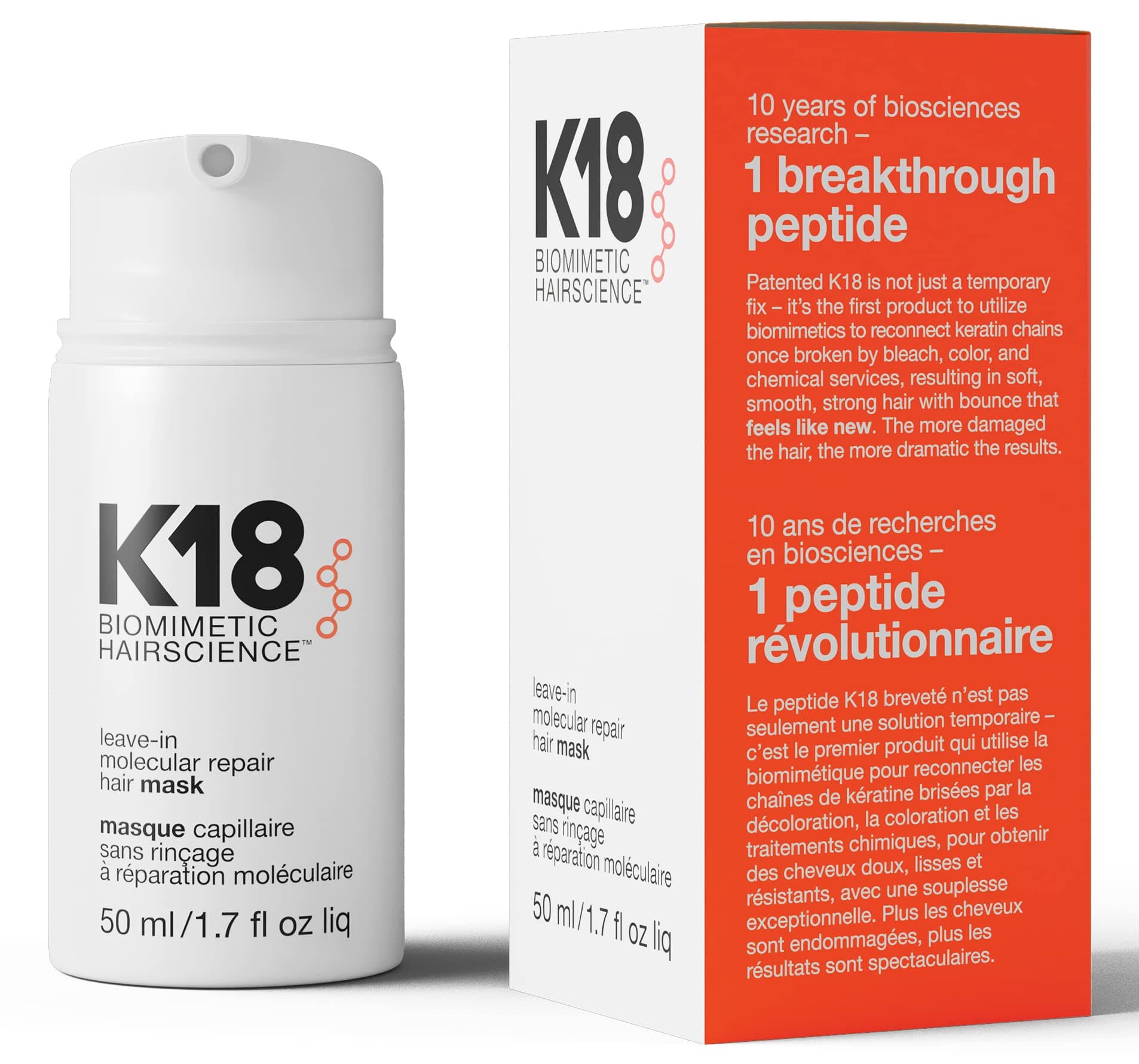
For hair that's truly seen better days—bleached, color-treated, or heat-styled into submission—the K18 Leave-In Molecular Repair Hair Mask is a legitimate investment. It's not a simple moisturizing mask; it's a highly specific, potent repair treatment that delivers on its core promise of restoring strength and elasticity from the inside out. While the high price and non-intuitive application process are significant hurdles, the results for its target audience are undeniable. It's a specialized tool, not an everyday conditioner, but for the right kind of damage, it's absolutely worth it.
What Went Viral
With over 2.5 billion views on TikTok, the K18 mask cemented its place in the #HairTok hall of fame by promising something revolutionary: molecular repair in just four minutes. Videos showcased dramatic transformations, turning brittle, damaged strands into smooth, resilient hair. The hype centered on its patented K18Peptide™, which claims to reconnect broken polypeptide chains in the hair's cortex—a level of repair that goes far beyond traditional surface-level conditioning. This scientific promise, combined with the speed of the treatment and endorsements from stylists and creators, created a viral feedback loop that keeps it on For You Pages everywhere.
What the Comments Actually Say
Across social media, the consensus is that K18 works, but only if you know how to use it. The gap between hype and reality often comes down to user error.
A recurring theme on both TikTok and Reddit is the confusion around the application instructions. The directive to skip conditioner before applying K18 is counterintuitive for many, leading to initial reports of dry, stiff, or tangled hair. As one YouTube creator admitted, she was "doing it wrong for a full year" by conditioning first.
Reddit users in forums like r/HaircareScience offer a more nuanced view. Many with severely bleached hair call it a "miracle" that "really brought my bleached hair back to its pre-treated texture." They confirm it reduces breakage and improves elasticity. However, these same communities warn of "protein overload and brittleness if overused," especially on hair that isn't severely damaged. It's a powerful treatment that requires careful, strategic use. YouTube reviews echo this, with creators like HONESTLIZ emphasizing that K18 is a repair product, not a conditioner, and should be alternated with moisturizing treatments to avoid stiffness.
Technical Comparison
Unlike standard deep conditioners or masks that work on the hair's exterior, K18's technology is designed to penetrate the cortex. Most conditioners use silicones, oils, and cationic polymers to coat the hair cuticle, providing temporary smoothness, slip, and moisture. This is essentially a cosmetic fix that must be reapplied after every wash.
K18's patented peptide is biomimetic, meaning it's recognized as a natural building block by the hair. It's small enough to penetrate the cuticle and reintegrate the broken disulfide bonds and polypeptide chains that form the hair's core structure. This results in lasting improvements to strength and elasticity, rather than a temporary coating that washes away. While other bond-builders work on disulfide bonds, K18's focus on the entire polypeptide chain is its key technical differentiator.
The Catch
The primary catch with K18 isn't that it doesn't work—it's that its efficacy is entirely dependent on a precise and unusual application method. You must shampoo (preferably with a clarifying one), skip conditioner, towel-dry thoroughly, emulsify a tiny amount in your hands until it turns white, and then apply it sparingly. Waiting the full four minutes before styling or applying other products is non-negotiable. Failure to follow these steps can lead to the most common complaints: hair feeling dry, stiff, or seeing no results at all. For $75, the margin for user error is frustratingly small, and the product's potential to cause brittleness if overused on healthy hair means it's not a one-size-fits-all solution.