The Verdict
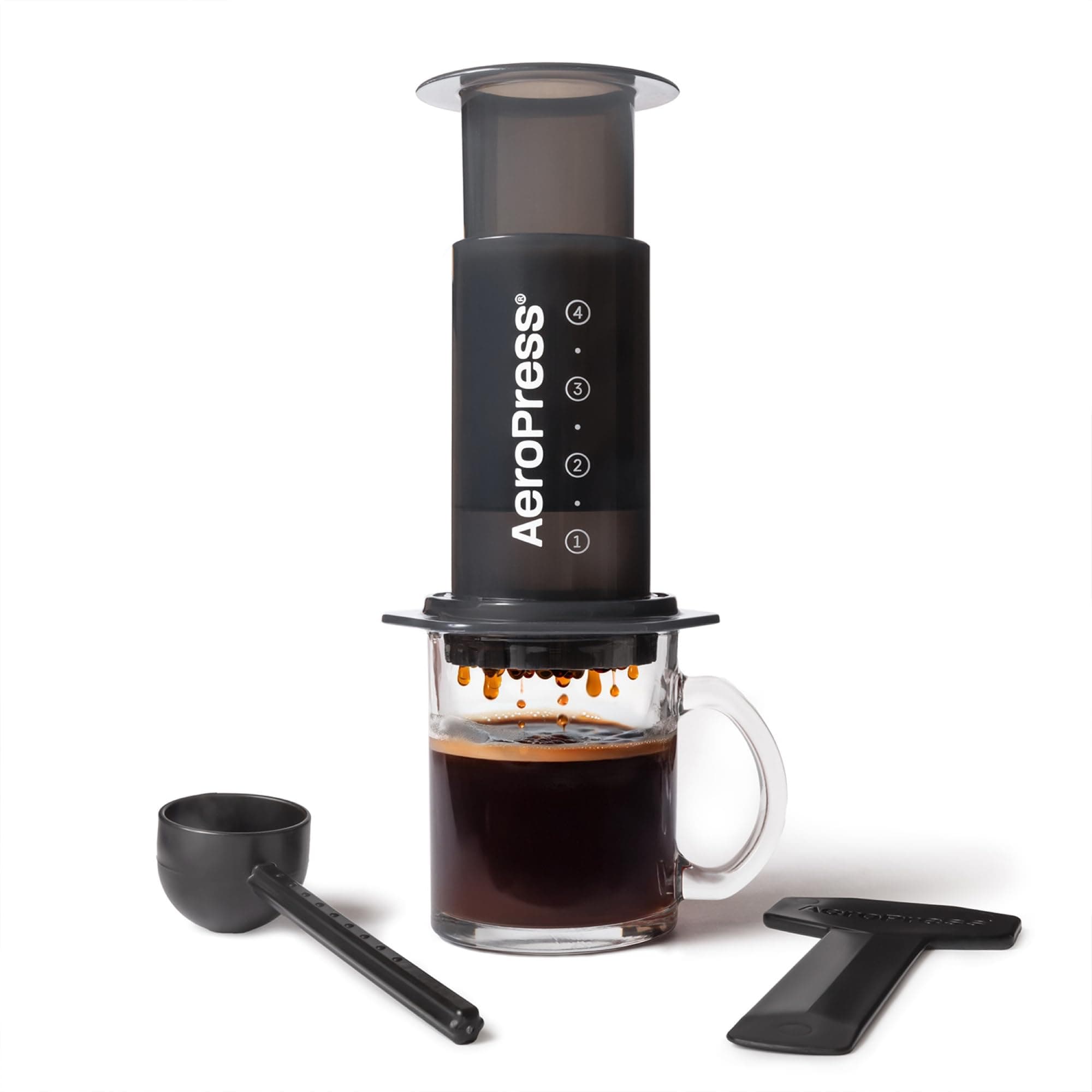
The AeroPress Original is a rare case where the product not only lives up to the social media hype but has been exceeding expectations for over a decade. For under $40, it offers a brewing experience that is fast, remarkably consistent, and endlessly versatile. It produces a uniquely smooth, rich, and grit-free cup that rivals equipment costing five times as much. Its durability is legendary in online coffee communities, and its portability is unmatched. The only significant caveat is its single-serving design; this is a personal coffee maker, not a device for serving a group. For solo coffee drinkers, travelers, or anyone seeking a simple path to a better cup, the AeroPress is an unequivocal buy.
What Went Viral
With over a million views on TikTok, the AeroPress has captivated a new generation with its deceptively simple and satisfying process. Viral videos typically showcase a user adding coffee and water, stirring briefly, and then smoothly plunging a rich, crema-topped, espresso-style concentrate into a mug—all in under two minutes. The visual appeal lies in its syringe-like mechanics and the impressive-looking result. Key selling points amplified on the platform include its '3-in-1' brewing claim (fusing elements of French press, pour-over, and espresso), its promise of less bitterness, and its rugged, compact form factor, making it an ideal companion for travel, camping, or minimalist kitchens.
What the Comments Actually Say
Across the web, user sentiment is overwhelmingly positive, bordering on evangelistic. On Reddit forums like r/BuyItForLife, commenters frequently report their AeroPress lasting for a decade or more with minimal maintenance, often just needing a new rubber plunger seal after years of use. Its ease of cleaning is a constant point of praise; users love that the grounds are ejected in a neat, dry puck, requiring only a quick rinse. An Amazon reviewer noted the coffee quality was 'actually better than my Kcup coffee maker.' YouTube reviewers consistently highlight the 'crisp, clean, very clear' flavor profile, attributing it to the paper filters and rapid extraction time. Review channel Daddy Got Coffee suggests it offers an 'easier entry point for consistently good coffee, even if you do it wrong.' The most common and consistent piece of critical feedback isn't a flaw, but a design choice: its limited brew volume, which is repeatedly flagged as being suitable for one person only.
Technical Comparison
When compared to an industry standard like the Bialetti Moka Express, the AeroPress's technical advantages become clear. The Moka pot uses steam pressure to percolate water up through coffee grounds, a method that can sometimes extract bitter compounds if the heat isn't managed perfectly. The AeroPress uses total immersion followed by air pressure from the plunger, giving the user precise control over brew time and resulting in a famously smooth, low-acidity cup.
Materially, the AeroPress's durable, BPA-free plastic construction is shatterproof and lightweight, making it far more portable than the Moka pot's aluminum body, which is tied to a stovetop. The most significant difference is in cleanup and versatility. The AeroPress's 'puck' ejection system is instantaneous and mess-free. The Moka pot requires disassembly, careful cleaning, and drying to prevent oxidation. Furthermore, the AeroPress can be adapted to create a huge range of coffee styles, from short espresso-like shots to diluted Americanos and even cold brew, whereas the Moka pot is designed for one specific, robust style of coffee.
The Catch
While the AeroPress is lauded for its speed, this advantage is strictly for a single serving. The core 'catch' that viral videos often gloss over is the small brew chamber. If you need to make coffee for a partner, roommate, or guest, you have to repeat the entire process—grinding, filling, steeping, and plunging—for each individual cup. This turns a two-minute process into a four, six, or eight-minute affair, making it less practical than a standard drip machine or French press for multi-person households.